engine block for Renault DS
48 Articles


Seal, for the cover plate at the engine block (left side of the engine block). Suitable for Citroen
DS, starting from year of construction 07/61. Citroen HY, to year of construction 02/1970. Or. No. DF11485 + 1D5413624P.
Seal, for the division of the engine block, for the main bearing mounting. Suitable for Citroen HY
starting from year of construction 1959. Citroen ID19 + DS19. Or. No. D1329
Frost threaded plug. Diameter: 14,5mm. Suitable for Peugeot Diesel,. Citroen HY Diesel. Or. No
0234.06. This frost plug can be ground to 14,2mm. Then it also fits in Citroen DS, HY petrol, 11CV. Or No. (14,2mm cover) 457.069 + ZC9457069U.
Crank case (engine block) air vent hose above. Connection to the air intake hose between carburetor
air filter. Suitable for Citroen DS with carburetor engine. Inside diameter: 15 + 17mm. Or. No. 5413610M.
Crank case (engine block) air vent hose down. Suitable for Citroen DS IE (injection engine)
Dimension: 19.5 x 314mm. Or.Nr.DX132279A.
Crank case (engine block) air vent hose down. Suitable for Citroen DS, to year of construction
07/1972 (carburetor engine). Diameter: Both sides 19-20mm. Length: 230mm (shorten if necessary). Or. No. DX13276C, DY13276A, DX132-76A
Seal under the crankcase ventilation on the engine block (flat ring rubber). Suitable for Citroen
DS. Or. 5412031, ca. 78x87x2,4mm. Made in Germany.
Liner sealing ring down. Suitable for Citroen 11CV, 15CV, ID19, HY. Standard measurement of 0,07mm
Inside diameter: 83,5mm. Outside diameter 95mm. Or. No.: D1113A
Liners sealing ring down (4 fittings). Suitable for Citroen DS 23. Bore 93,5mm. Dimension
108x99x0,2mm. Or.Nr. DS111-3
Liners sealing ring down, suitable for Citroen DS 19/20/21. starting from year of construction
9/1968. 107x98,5x0,2 mm measured. Bore 90,0mm. Per piece! Or. No. DX1113
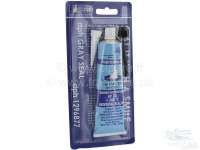
Engine sealing compound grey, to 340°, 85ml, silicone basis. Optimally for oil pans, valve cap
valve timing cover. Very good quality. Made in Germany.
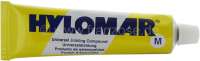
HYLOMAR engine sealing material, permanent elastic engine sealing, indispensable with engine
e overhaul, 80ml. Hylomar M is temperature resistant between -50°C and +250°C and can be applied for sealing sealing surfaces and threaded pieces.
Engine exhausting hose, at the throttle valve holder. 90° bent. Inside diameter: 16,50mm. Suitable
for Citroen DS IE. Or. No. DX132-281A
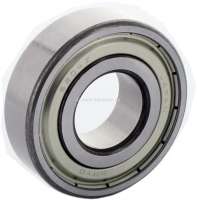
Camshafts bearing in front (1 item/SKF), suitable for Citroen DS. Dimension: 47x20x14 mm (ball
bearing closed). Manufacturer: SKF

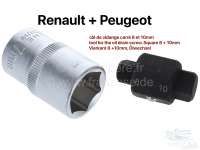
Oil drain screw magnetically, suitable for Citroen 2CV, HY, DS, 11CV (with oil pan out of sheet
metal). Interior square. The suitable tool has our number 20221. Or. No. A1321M, thread M16x1,5x20

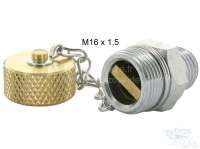
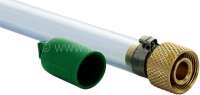
Oil drain screw with valve. Thread M16 x 1,5. This valve is mounted instead of the original oil
drain screw. Simply remove protecting cap - tighten hose - then the valve opens. Protecting cap mount - valve closed. Everything without tool. No dirty and burned hands. No oil on the floor. 10637 is a neccesary item. And only 1 time mounting. That preserves the thread in the oil pan (those are often no longer supplyable). Completely manufactured in Germany! The thread M16 x 1.5 was Installed in: Citroen 2CV, DS, HY, 11CV, GS. Nearly all classical Peugeot (403, 404, 504, 304, 204)
Gasket for oil drain plug for 2CV6, BX, XM, 204, 203, 304, 404, 504. inlet + exhaust screw
measure: 16,3x22x2mm. Version C, curved with a seal inside. (PTFE)
Oil pressure switch, suitable for Citroen ID19, DS19, HY petrol. Citroen 2CV + AMI6 without oil
filters! Thread: M14x1,5.
Oil pan (drip pan), for the later attachment. Suitable for Citroen DS, starting from year of
construction 1967. This "bungle sump" is mounted at the original fastening spots, and traps leakage oil.

Oil pan rubber seal (2 fittings), seal to the crankshaft. Suitable for Citroen 11CV D engine, ID19
DS19, HY. Or.Nr. D113-11 + D113-12. Made in Germany.
Belt pulley in front, suitable for Citroen DS, starting from year of construction 1965. It is a
used belt pulley, which is sandblast and painted. It is again balanced. Internal teeth are not painted. Or.Nr. 2D5414407A
Camshaft drive chain duplex, 66 chain links. Suitable for Citroen 11CV, 15CV, ID19, DS19, HY
1911ccm to year of construction 1966. Original quality!
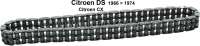
Camshaft drive chain duplex, 70 chain links, suitable for Citroen DS, starting from year of
construction 1966, also suitable for Citroen CX. Reproduction!

Camshaft drive chain duplex, 70 chain links, suitable for Citroen DS, starting from year of
construction 1966, also suitable for Citroen CX. Original supplier!
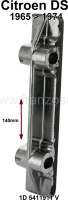
Camshaft drive chains sliding rail. Suitable for Citroen DS, starting from year of construction
1965. Length: 140mm. Or. No. 5411911 + 1D5411911V

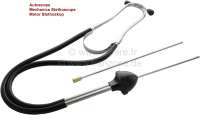
Timing chain tensioner, suitable for Citroën ID19. Citroën 11CV + 15CV. Citroën HY. Dimensions
114x29mm. Or. No. 461256S. But beware: think carefully before installing the chain tensioner. Because the chain will inevitably rub against the chain tensioner (metal on metal = abrasion). We would rather drive without a chain tensioner and replace the timing chain more often.
Spur gear largely. 38 teeth. 27,6mm. Suitable for Citroen 11CV D, starting from year of
construction 10/1954. Citroen ID 19 + HY. Or. No. 457347
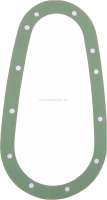

Valve timing cover - seal (material: Paper). Suitable for Citroen 11CV (D-Engine). Citroen ID19
Citroen HY. Or. No. 451762. Made in Germany.
Valve timing cover - seal, suitable for Citroen DS, starting from year of construction 1965
Original manufacturers!
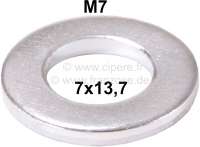
Cam follower, suitable for Citroen DS + HY, from year of construction 6/1956 to 1966. Dimension: 26
x 50 x 14mm. Or. No. DS124-1
Identification plate orange, for Citroen. 78x40mm. 2 bores. (Metal). The red identification plates
were often used for engine numbers!
48 Articles
Citroën DS and ID: Overview of Models and Technical Specifications
What are the differences in engines and transmissions?
Facts about the Citroën DS and ID
- Years of production: 1955 to 1975
- Number of vehicles produced: 1,330,755
- Production sites:
- France: Citroën’s Javel plant in Paris and, starting in 1973, the Aulnay plant
- Belgium: Forest
- England: Slough
- South Africa: Johannesburg
Model names
Nine major model families:
- DS19 from 1955 to 1965 with a 3-bearing engine and from 1966 to 1968 with a 5-bearing engine (DY 1985 cm³)
- ID19 from 1955 to 1966 with a 3-bearing engine and from 1967 to 1969 with a 5-bearing engine (DV then DV2 1985 cm³)
- DS20 from 1969 to 1975 with a 5-bearing engine (DY2/DY3 1985 cm³)
- ID20 in 1969 with a 5-bearing engine (DY2 1985 cm³)
- DSpecial from 1970 to 1975 with a 5-bearing engine (DV2/DV3 1985 cm³)
- Dsuper from 1970 to 1975 with a 5-bearing engine (DY2/DY3 1985 cm³)
- Dsuper5 from 1973 to 1975 with a 5-bearing engine (DX2 2175 cm³)
- DS21 from 1966 to 1975 with a 5-bearing engine (DX/DX2/DX3 2175 cm³)
- DS23 from 1973 to 1975 with a 5-bearing engine (DX4/DX5 2175 cm³)
Body: Three periods
- 1956 to 1962: Front end with round headlights and a bumper without rubber buffers
- 1963 to 1967: Front with round headlights and fenders featuring an opening below the headlight; bumper with rubber buffers
- 1968 to 1975: Two front headlights in a plastic housing under a glass cover (display case) and a new bumper design
Note: Change in exterior door handles starting in 1972 (raised door handles until 1972, recessed door handles in recessed grips starting in 1972).
Engines: Two generations
- 1955–1966: 3-bearing engine, 1,911 cm³ until 1965 (DS19) and 1,966 cm³ in 1966 (ID19)
- 1965–1975: 5-bearing engines, 1,985 cm³ / 2,175 cm³ / 2,347 cm³
Transmission and gearbox: Three versions
- ID19, ID20, Dspecial, and Dsuper have a 4-speed manual transmission (MT), except for some Dsuper (DY) models with an optional 5-speed transmission.
- All Dsuper5 (DX2) models have a 5-speed manual transmission (MT).
- DS19, DS20, DS21, and DS23 were available with the following options:
- Semi-automatic – a hydraulically controlled 4-speed transmission (bvh)
- Mechanically controlled 4-speed manual transmission (bvm), except for the DS19MA (1966–68), DS20M (1969–70), and DS21 mécanique (1966–72)
- Mechanically controlled 5-speed transmission (bvm) on DS21 and 23 starting in 1971
Pedal difference: Two types of brakes
- Mushroom-shaped brake pedal on the floor = all DS sedans and all DS and ID station wagons
- Suspended brake pedal with a more conventional pedal = ID, Dspecial, Dsuper.
Distinguishing feature in the interior
You can immediately recognize the version with a standard clutch by the footwell: models with a manual transmission have the classic, wide clutch pedal, while the semi-automatic models have only a very small, mushroom-shaped rubber pedal (the “brake mushroom”).
The transmission variants of the DS Pallas
Depending on the model year and engine, the following options were available for the luxurious Pallas trim:
- Manual transmission: This featured a standard clutch pedal.
- 4-speed manual transmission: Standard in early DS models.
- 5-speed manual transmission: Later available as an option or standard (e.g., on the DS 23 Pallas), which significantly improved driving comfort on highways.
- Semi-automatic 4-speed transmission (BVH): The clutch-less system in which gears are selected manually via a lever on the steering column, while the hydraulics handle the clutch operation.
- Fully automatic: In the final years of production (from around 1971), a genuine 3-speed automatic transmission from Borg-Warner was also available for the larger engines (DS 21/23).
What is a BVM transmission and what is a BVH transmission?
In the Citroën DS, the abbreviations refer to the way the transmission is controlled. Technically speaking, both are based on a mechanical manual transmission, but they differ fundamentally in how the driver operates them.
BVM – Boîte de Vitesses Manuelle
Meaning: Classic manual transmission.
Operation: As in a conventional car, there is a clutch pedal. The driver must press this to disengage the drive and shift gears themselves using a gear lever on the steering column.
BVH – Hydraulic Transmission
Meaning: Semi-automatic, hydraulically controlled transmission.
Operation: There is no clutch pedal. Disengaging and engaging the clutch, as well as the actual gear-shifting process in the transmission, are handled by the vehicle’s central high-pressure hydraulic system.
Operation: The driver simply selects the gear using a small selector lever behind the steering wheel. As soon as the lever is moved, the system automatically disengages the clutch, shifts gears, and re-engages the clutch.
Special feature: You start the car by pushing the shift lever into the starter position (this was designed specifically to ensure that no gear is engaged when starting). Additionally, the BVH features an idle accelerator that allows the car to move without pressing the gas pedal (similar to the “creep” function in modern automatic transmissions).
All Citroën DS models with BVH transmissions have a mechanical emergency clutch release located below the steering column! This means the DS can still be moved even if a gear is engaged and the engine won’t start!
 Select your Citroen


 Please select your Peugeot


 Please select your Citroen Renault