hydraulic fluid and brake fluid for Citroën 2CV Dyane
12 Articles


Brake fluid DOT4. 1 liter. Manufacturer ATE. Suitable for all Citroen 2CV to year of construction
1981 (vehicles with drum brake in front). Citroen 11CV, HY. All Peugeot and Renault models.
Brake fluid DOT4. 1/2 liter. Manufacturer TOTAL. Suitable for all Citroen 2CV to year of
construction 1981 (vehicles with drum brake in front). Citroen 11CV, HY. All Peugeot and Renault models.
Brake fluid DOT4. 5,0 liter can. Manufacturer TOTAL. Suitable for all Citroen 2CV to year of
construction 1981 (vehicles with drum brake in front). Citroen 11CV, HY. All Peugeot and Renault models.
Brake fluid reservoir seal for the locking cap (2 circle). Suitable for Citroen 2CV, with LHM
double circle brake system.
Brake fluid reservoir with locking cap, for the brake system DOT. Suitable for Citroen 2CV6 with
front drum brakes. The reservoir is white dyed and has a white lid. The connection on the master brake cylinder is from center to center: 70mm.
Brake fluid reservoir with locking cap, for the brake system LHM. Suitable for Citroen 2CV6 with
front disk brake system. The reservoir is green dyed and has a white cap. The connection on the master brake cylinder is from center to center: 70mm. Or.Nr.: 95554585
Brake fluid reservoir locking cap (with electrical connection), for the brake system LHM. Suitable
for Citroen 2CV6, starting from year of construction 1981. (Tandem reservoir)
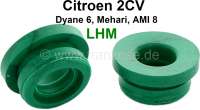
Master brake cylinder rubber seal (1 pair, green dyed)) for the brake fluid reservoir. Brake system
LHM. Dual circuit brake system. Suitable for Citroen 2CV6 starting from year of construction 9/1981. Reproduction!
Master brake cylinder rubber seal (per piece) for the brake fluid reservoir. Brake system LHM. Dual
circuit brake system. Suitable for Citroen 2CV6 starting from year of construction 9/1981. Reproduction!
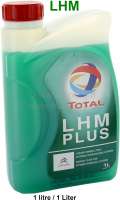
LHM+ green, hydraulic fluid. 1 liter. Suitable for Citroen 2CV starting from year of construction
1981 as brake fluid (vehicles with disc brake). Citroen DS starting from year of construction 1967, Citroen CX, GS, etc. for hydraulics.
 PDF FILE

Oil draining pump 12 Volt. Ideal for emptying the hydraulic tank. For example Citroen DS, CX, GS
etc.. Of course other huiles oils can also be pumped with it. Super practical.
12 Articles
Citroën Dyane Brake Fluid: DOT or LHM?
With the Citroën Dyane, it’s not just the model name that matters. What’s important is which brake system is actually installed.
For a Dyane with front drum brakes, standard glycol-based brake fluid is typically used, usually DOT 3 or DOT 4 depending on the model.
In contrast, a late-model Dyane or Dyane 6 with front disc brakes requires LHM or LHM+ in the brake system. This is the green, mineral-based Citroën hydraulic fluid. DOT brake fluid must not be used in this system.
The simple basic rule
- Front drum brakes = DOT brake system
- Front disc brakes = LHM brake system
Therefore, please always check the actual brake system installed and do not rely solely on model names such as “Dyane,” “Dyane 4,” or “Dyane 6.”
Why the right brake fluid is so important
LHM and DOT are chemically completely different fluids. LHM is mineral-based, while DOT brake fluid is synthetic or glycol-based. The seals, boots, lines, wheel brake cylinders, brake calipers, and the master cylinder are each designed for the appropriate fluid.
A serious mistake is adding DOT brake fluid to an LHM system. This can attack, cause swelling, or destroy seals and rubber parts. In the worst-case scenario, the entire brake system must be overhauled.
If the vehicle’s history is unknown, you should therefore always first determine with certainty what fluid is in the system and what type of brake system was installed.
Identifying features of the LHM brake system on the Dyane
Typical indicators of an LHM brake system are:
| Characteristic | Meaning |
|---|---|
| Green fluid in the reservoir | Indicates LHM |
| Green master cylinder or green marking | Indicates LHM version |
| Front disc brakes on the transmission | Late Dyane model, usually LHM |
| Front drum brakes | Earlier brake system, usually DOT |
Important: Color alone is not always a reliable indicator. Old, contaminated, or improperly mixed fluid can discolor. If in doubt, the brake system should be professionally inspected.
Brake fluid change interval
LHM also degrades in the brake system. Although LHM absorbs less water than traditional DOT brake fluid, dirt, debris, and moisture can accumulate in the system over time.
A sensible maintenance guideline is:
Replace LHM in the brake system at least every 40,000 km or every 5 years.
For older vehicles or vehicles that have been idle for a long time, a shorter replacement interval is recommended. In such cases, simply bleeding the system briefly is not sufficient. It is advisable to completely replace the fluid and then inspect the entire brake system.
Citroën Dyane Brake System: Typical Weak Points and Bleeding
Typical weak points of the Citroën Dyane brake system
1. Confusion between DOT and LHM
Using the wrong brake fluid is one of the most critical mistakes with the Dyane. LHM and DOT must not be mixed together. If you are unsure which fluid was used, the vehicle should not be driven until the brake system has been inspected.
If you suspect the fluid was filled incorrectly, simply topping it off or a quick flush is usually not enough. The master cylinder, brake lines, wheel cylinders, brake calipers, and seals must be carefully inspected and, if necessary, replaced or overhauled.
2. Seized rear wheel brake cylinders
The rear drum brakes are frequently affected by corrosion in stationary vehicles. Wheel brake cylinders can seize up or develop leaks.
Typical signs include:
- uneven braking
- damp anchor plates
- Fluid loss
- gradually decreasing pedal pressure
- poor braking performance on the rear axle
3. Incorrectly adjusted drum brakes
The Dyane has drum brakes in the rear. On early models with front drum brakes, these must also be adjusted correctly.
Correct adjustment is crucial for a short pedal travel and consistent braking performance. If the eccentrics or adjusters are set incorrectly, the brake pedal may have a long travel, even though the system has been properly bled hydraulically.
Therefore, the drum brakes should always be mechanically adjusted correctly before the braking system is evaluated.
4. Sticky front calipers on disc brake models
On the Dyane with front disc brakes, the calipers are located inside the transmission housing. There, they are exposed to heat, dirt, and oil mist.
Possible problems include:
- sticky pistons
- leaky calipers
- contaminated brake pads
- oil on the brake discs
- uneven braking
5. Parking brake
On the Dyane, the parking brake acts on the front wheels due to its design. Depending on the model, it engages the front brake drums or, on later models, the front brake discs.
Poor handbrake performance is often caused by:
- incorrect adjustment
- worn parking brake linings
- incorrectly adjusted brake shoes on drum brake systems
- stiff operation
- dirty or greasy components
6. Old or damaged brake lines and fittings
In older vehicles, brake lines, fittings, and connectors can corrode or develop leaks. Components that appear undamaged on the outside should always be carefully inspected if the vehicle has been idle for a long time or has an unknown history.
Typical consequences include:
- Fluid loss
- Uneven braking performance
- spongy pedal feel
- Delayed brake release
- Individual wheels become warm or hot
7. Leaking master cylinder
A defective or leaking master cylinder is often indicated by decreasing pedal pressure, fluid loss, or moisture in the area around the pedal well and dashboard.
In a hydraulic brake system, pay particular attention to green, oily marks.
Bleeding the Citroën Dyane brake system with disc brakes
The following description applies to a late-model Dyane or Dyane 6 with front disc brakes and a hydraulic brake system.
Preparation
You will need:
| Part / Tool | Note |
|---|---|
| LHM or LHM+ | Use only for LHM brake systems |
| Transparent hose | Fits the bleed nipple |
| Collection vessel | Clean and stable |
| Ring spanner | For opening the bleed nipple |
| Helper or pressure bleeder | Use pressure bleeder only at low pressure |
| Brake cleaner and rags | LHM is oily; brake discs and pads must remain clean |
Before bleeding, check the following:
- Park the vehicle securely and jack it up.
- Clean the reservoir to prevent dirt from entering the system.
- Check for the correct fluid: For front disc brakes, use LHM or LHM+.
- Adjust the rear drum brakes mechanically to the correct settings.
- Check the master cylinder, lines, wheel cylinders, and calipers for leaks.
Bleeding sequence
In practice, work from the longest to the shortest line:
- rear right
- rear left
- front left (both calipers are bled using only one bleed screw)
It is crucial that the system is completely bled, the reservoir never runs dry, and work is continued at each bleed point until bubble-free, clean fluid emerges.
Bleeding with an assistant
- Fill the reservoir with hydraulic fluid up to the mark.
- Attach the hose to the bleed nipple and place the end of the hose into a collection container.
- Slowly press the brake pedal two to three times and then hold it under pressure.
- Briefly open the bleed nipple to allow fluid and air to escape.
- Do not press the brake pedal all the way to the floor to avoid putting unnecessary strain on older seals in the master cylinder.
- Close the bleed nipple again.
- Only then release the brake pedal.
- Repeat the process until no more air bubbles escape.
- Check the fluid level after each bleed point and top up if necessary.
- Clean all bleed nipples and check them for leaks.
The brake pedal should be pressed slowly. Pumping too quickly can cause air and fluid to foam, making bleeding more difficult.
Bleeding with a pressure bleeder
A pressure bleeder can be used, but should be used with caution on older vehicles. With old reservoirs, caps, and seals, only low pressure should be used.
A reasonable pressure range is usually around 0.5 to 1.0 bar, provided the cap is tight and the system is suitable for this.
The advantage of this method: The master cylinder is protected because the brake pedal is not pressed all the way into otherwise unused areas of the cylinder.
Check after bleeding
After bleeding, the brake pedal should feel firm. Then check the following:
- Press the brake pedal several times. It must not sink slowly.
- Check all bleed nipples and connections for moisture.
- Check the rear brakes again and adjust them correctly.
- Adjust and check the parking brake separately.
- Take a careful test drive.
- After the test drive, check whether any individual wheels become unusually warm.
A hot wheel can indicate a grinding brake, a stuck piston, or a hydraulic return problem.
If the brake pedal remains soft
If the pedal remains soft after bleeding or the pedal travel is too long, the following causes are often possible:
| Symptom | Possible cause |
|---|---|
| Pedal soft, no visible leak | Air still in the system |
| Long pedal travel, weak braking effect | Drum brakes incorrectly adjusted |
| Pedal sinks slowly | Master cylinder has an internal leak |
| One wheel barely brakes | Wheel brake cylinder seized, line clogged, or air in the system |
| Brake releases poorly | Piston stuck, line clogged, or return flow obstructed |
| Parking brake does not work properly | Handbrake pads, adjustment, or mechanism faulty |
Important note regarding Citroën Dyane brake fluid
Do not experiment with the brake fluid on the Citroën Dyane.
- Front disc brakes = LHM or LHM+
- Front drum brakes = DOT system
- Never mix LHM and DOT
If the vehicle has been parked for an extended period, the brake system should not only be bled but also thoroughly inspected. In particular, the wheel brake cylinders, brake lines, master cylinder, brake calipers, and the adjustment of the drum brakes are crucial for ensuring that the Dyane brakes safely, evenly, and reliably.
 Select your Citroen


 Please select your Peugeot


 Please select your Citroen Renault