2CV, bracket (welded) for the gear lever. Suitable for Citroën 2CV, AK, AZU. This bracket is
welded from above the storage compartment (dashboard).


welded from above the storage compartment (dashboard).
construction 1966. Or. Nr.AZ33480
heads) + gearshift diagram! Colour black. Suitable for Citroen 2CV, Dyane, Mehari
Citroen 2CV, Dyane, Mehari
lever interior onto the gear lever to the gearbox.
for Citroen 2CV6, 2CV4, Dyane, Mehari, AK.
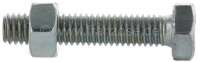
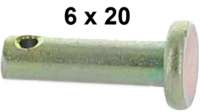
2CV. Measurement: 6x20mm. Or.Nr.: A334-57
lever on the gearbox. (without rubbers). Suitable for Citroen 2CV.
for Citroen 2CV. This connector is mounted between the gearstick lever from the passenger compartment and the gearstick lever on the gearbox.
lever from the vehicle interior and the gear lever on the gearbox.
The shift linkage of the Citroën 2CV6 is a key component of this vehicle’s unique transmission system. Unlike in many modern vehicles, the shift lever is not located on the center console but is positioned horizontally in the dashboard. Gears are engaged by pulling, pushing, and turning the shift knob sideways.
For the 2CV6 transmission to operate precisely, the shift rod, guide bushings, connecting parts, and the gear lever must work together correctly. Even minor signs of wear can cause the gears to engage imprecisely, spongily, or with difficulty.
The 2CV6 features a mechanical pull-and-twist gearshift. The movement of the gearshift knob is transmitted via a shift rod through the bulkhead to the transmission. There, the linkage actuates the lower gearshift lever, which in turn moves the gearshift mechanism inside the transmission.
Operation involves three basic movements:
| Movement of the shift knob | Effect on the transmission |
|---|---|
| Pull | Selecting a gear in one direction |
| Push | Selecting a gear in the opposite direction |
| Turning or tilting the shift lever sideways | Change of gear |
| Combination of pulling, pushing, and turning | Selecting the desired gear |
This shifting system may feel unfamiliar at first, but it essentially follows the principle of a classic H-pattern shifter.
Once you get used to the shifting mechanism, you won’t want to be without it. Especially in city traffic, pushing or pulling the shift lever allows you to drive very comfortably in the optimal range between 2nd and 3rd gear.
The shift linkage of the Citroën 2CV6 consists of several components that together transmit movement from the passenger compartment to the transmission.
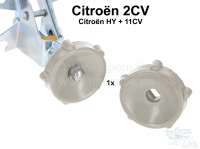
The gear knob is the control element in the cabin. All gear changes are performed via it. Depending on the model year and version, the gear knob may have a different design.
The shift rod runs through a guide tube toward the engine compartment. This area contains plastic bushings that ensure smooth guidance of the shift rod. If these bushings are worn, the shifting may become loose or imprecise.
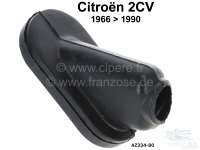
There is a seal at the point where the shift rod passes through the bulkhead. It prevents water, drafts, noise, or odors from entering the passenger compartment from the engine compartment. A damaged seal should be replaced, even if it is not directly responsible for gear selection.
Between the shift rod and the gearshift lever is a connector with bushings, bolts, washers, and lock washers. This component is particularly important for precise power transmission. Wear in this area often leads to play in the shifting mechanism.
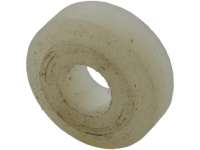
We also carry a connector with robust PTFE plastic bushings. Replacement is straightforward.
The lower gear lever transmits the movement of the shift linkage to the transmission. It must be securely fastened and must not rotate on the shaft. Rotation of this lever can affect the length of the gear shifts. The shift linkage may also strike the heating hoses on the side (Caution—secured with an M7 screw)
The 2CV6’s shift pattern differs significantly in operation from a modern center-mounted shifter. Gears are selected using the horizontal shift rod in the dashboard.
First gear is located at the back left, with reverse gear opposite it. Second and third gears are opposite each other in the center gear column. Fourth gear is located at the front right.
The neutral position is often labeled “PM” on the 2CV. Reverse gear should only be engaged when the vehicle is completely stationary. Since reverse gear is not synchronized, it is recommended to wait a moment after depressing the clutch.
In the Citroën 2CV6, imprecise or stiff shifting is usually caused by wear or incorrect installation of individual components. The rubber bushings in the linkage and an incorrect position of the shift lever on the transmission are particularly prone to this issue.
A spongy shifting feel is caused by worn-out rubber bushings at the connection between the shift rod and the gear lever. This creates play, which is clearly noticeable on the long gear lever.
Typical signs include:
If the plastic guides in the guide tube are worn out or missing, the shift rod may rattle. It also often becomes harder to feel the neutral position.
Possible symptoms include:
If individual gears are difficult to engage, the cause may be an incorrect default position of the shift linkage. Bent connecting parts or incorrectly installed bushings can also alter the shift travel.
Possible causes include:
The reverse gear on the 2CV6 is not synchronized. Therefore, it should only be engaged when the vehicle is stationary and after a short wait. If reverse gear is still consistently difficult to find, the shift linkage should be checked.
Common causes include play in the rotational movement, an incorrect lever position, or worn-out bushings.
The 2CV6 does not have a modern fine-tuning mechanism like many cable-shift systems. Precise shifting is achieved primarily through components with no play, a correct neutral position, and a tension-free installation.
Before making any adjustments, all wear parts should be checked first.
Important checkpoints are:
A worn-out shift linkage cannot be adjusted properly in the long term. If worn parts are not replaced, an adjustment usually improves shifting performance only temporarily.
First, ensure that the transmission is clearly in neutral. The shift knob inside the vehicle should also be in the neutral center position. Next, check whether the connecting piece is installed without tension and whether all bushings, washers, and fasteners are seated correctly.
After installation, all gears should be tested with the engine off and the clutch depressed. The gears must be accessible without force. It is particularly important to clearly distinguish between 4th gear and reverse gear.
| Symptom | Possible cause |
|---|---|
| Gearshift feels spongy | Worn bushings or bolts |
| Shift knob rattles or clatters | Plastic guides in the shift tube are worn |
| Reverse gear is hard to engage | Play in the linkage or incorrect default position |
| 4th gear and reverse gear are barely distinguishable | Wear in the rotating mechanism or on the shift lever |
| 1st and 2nd gears difficult to engage | Incorrect adjustment or worn connecting parts |
| Gearshift shifts on its own after a short drive | Loose clamp on the gearshift lever |
| Cold air or odor in the cabin | Dashboard seal damaged |
| Gear grinds when shifting | Clutch does not disengage cleanly or gear is engaged too quickly |
If the shifting of a Citroën 2CV6 feels imprecise, stiff, or spongy, the entire shift linkage should be checked first. Small components in particular, such as bushings, pins, washers, and retaining clips, have a major impact on the shifting feel.
A good 2CV6 shift mechanism depends less on a complicated adjustment and more on correctly installed, play-free components. If worn parts are replaced in a timely manner and the linkage is aligned without tension, the shift mechanism can be operated much more precisely again.
Replacing the rubber bushings or the entire shift lever costs only a few euros and takes just a few minutes. All wear parts can be easily accessed and replaced from above with the hood open.
A spongy shift is usually caused by worn bushings, worn-out bolts, or play in the connecting piece between the shift rod and the gear lever.
Rattling noises are often caused by worn plastic guides in the shift tube or by play in the connecting parts of the shift linkage.
Yes, the shift linkage can be aligned. However, it is crucial that all bushings, bolts, washers, and lock washers are in good condition. A worn linkage cannot be adjusted precisely in the long term. Replacing the wear parts costs only a few euros and takes just a few minutes. The vehicle does not need to be lifted onto a lift, as everything is easily accessible from above with the hood open.
The reverse gear on the 2CV6 is not synchronized. The vehicle should be completely stationary before reverse gear is engaged. If the gear is still hard to find, the shift linkage should be checked for play and incorrect adjustment.
The rubber bushings, bolts, and retaining clips on the connector between the shift rod and the gear lever are frequently affected.
Before making any adjustments, check the bushings, guides, bolts, retaining clips, the clamp on the gearshift lever (Note: M7 screw for an 11 mm wrench), the clutch adjustment, and the engine and transmission mounts.










 Select your Citroen


 Please select your Peugeot


 Please select your Citroen Renault