Head light bracket 2CV old, second version! For 2CV starting from year of construction 1961. (The
first models after corrugated sheet bonnet!)


first models after corrugated sheet bonnet!)
year of construction 1961. Original of MCC France.
piece). Or. No. AK54151
for the adjustment. It is the last version, installed until 1990. Or. No. A54186
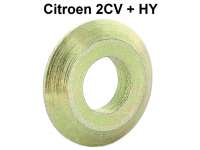
Suitable for Citroen 2CV + HY. Or.Nr. 5443127
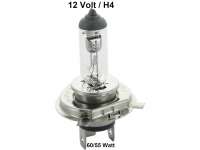
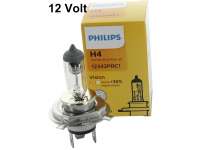
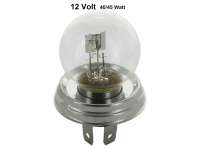
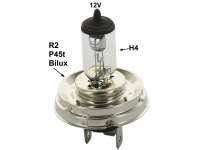
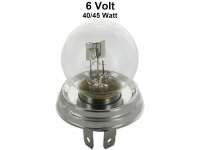
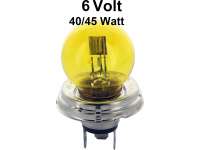
originally has a double filament bulb (P45) can be converted to an H4 bulb. You get much better light! Universal suitable.
Suitable for Citroen 2CV to 9/1968. Or.Nr. 4816-S
Citroen DS, Citroen 2CV, Citroen HY. Made in Germany.
with short cable ends and round plugs.
Length: 35,50mm. Mounting: 22 x 6mm. Or. No. 706306
2CV. Length: 31mm. Or. No. 706307
2CV. Length: 30mm. Or. No. 706305
to about year of construction 1972. Wide headlight chrome ring. About 150mm diameter!
hitched above and below and prevent that the reflectors drop out. These addiotional fitting are just for expeditions, for road traffic forbidden.
fitting. This headlamp was an original related accessory for Citroen 11CV. Diameter: 140mm. The case is chromium-plated and made of metal. Without "E" test character! Suitable bulb 12 Volt= 14415, 14418, 14417. Bulb 6 V = 14178
The history of the 2CV’s headlights is less a matter of “round → square → round” and more a sequence of design, electrical systems, mounting, and model strategy.
The early TPV prototypes of the 1930s were even more radical than the later production 2CV. Many depictions show or describe them with very simple lighting; some prototypes even had only a single headlight. For production development, however, this is only relevant as background history, since the production 2CV from 1949/1950 had two headlights.
The first production 2CV A models had round, freestanding headlights on the left and right sides of the hood. They were not integrated into the body but mounted on brackets next to the hood. This fit the overall concept: easy to repair, inexpensive to manufacture, and easily accessible.
A very early detail: In March 1950, the headlight lens was changed from plastic to glass. This shows that Citroën made technical improvements to the lighting system shortly after production began.
In the early 1950s, the headlights remained round, but the units supplied and their details changed. Starting in October 1953, Marchal Equilux headlights were installed alongside Cibié units; these can be identified by a steel rim on the reflector. In June 1954, the mounting bracket for the Cibié headlights was changed, and in July 1954, the headlight bracket was also modified due to a different ignition coil.
In 1955, further differences emerged: Cibié headlights featured an aluminum rim on the reflector, and starting in October 1955, Ducellier Isoroute headlights also appeared. These can be identified by a reflector that is smaller than the headlight’s metal housing.
All headlights had a “headlight-on indicator” on the headlight housings. This was a red plastic prism that lit up as soon as the headlight was turned on. This requires a special bulb with slits in the base. This directs the light into the headlight housing so that the “light-on indicator” can illuminate. We still carry these prisms for Cibié, Marchal, and Ducellier headlights in our product range today.
For restorers, this means: With early 2CVs, “round headlight” alone is too vague. The year of manufacture, the manufacturer—Cibié, Marchal, or Ducellier—as well as details such as the chrome or aluminum ring, the shape of the glass, and the mounting method all matter. However, all of these very old headlights are difficult to source today. In most cases, one must therefore resort to used parts, or, with a bit of luck, new NOS parts are occasionally available.
The headlights themselves remained round in their basic shape. What did change, however, was the overall front design: in 1961, many variants received the new hood with a removable grille. In 1965, the one-piece grille was replaced by the three-bar grille, and the Citroën double chevrons moved to the hood.
This is visually significant: The 2CV gained a more modern-looking front end, but the “eyes” remained freestanding round headlights.
In 1967, the AZAM/export version had square turn signals on the front fenders. In 1970, major changes were made to the 2CV4 and 2CV6: 12-volt electrical system, redesigned taillights, a new dashboard, and initially square front turn signals. As early as June 1970, these square front turn signals were replaced again with round ones. The main headlights remained round during this phase.
Also important: In September 1969, Marchal and Ducellier headlights were discontinued on the 2CV sedan; thereafter, the headlight equipment was standardized to Cibié.
In September 1974, the most notable change arrived: the 2CV received rectangular headlights, often referred to as “square.” At the same time, a new plastic grille with a plastic trim and inner double angles was introduced, along with larger or redesigned bumpers and other body and interior changes.
In summary: Starting in September 1974, rectangular headlights replaced the round ones on all models—the 2CV4 and 2CV6 sedan, as well as the AZU and AKS vans.
Technically, this was not just a different headlight. Since the rectangular headlights were wider, the 2CV required a different headlight mount, i.e., a different headlight bracket with a larger mounting distance. This prevented the hood from rubbing against the headlights when opening and closing.
In September 1975, the 2CV Spécial was introduced. It was deliberately equipped more simply and once again featured round headlights. This was not a complete step backward for the entire model range, but rather a model split: The simpler Spécial received round headlights, while the better-equipped 2CV4 and 2CV6 variants retained rectangular headlights.
An interesting repair note: Although the round headlights made a comeback, Citroën retained the wider headlight bracket introduced for the rectangular headlights for cost reasons—and did so until the end of 2CV production in Portugal on July 27, 1990. As a result, 2CVs with the wide headlight bracket built from 1974 onward appear slightly differently proportioned in the front end compared to models built before 1974.
The 2CV4 was discontinued in 1978. In 1979, the 2CV Spécial was equipped with the 602-cc engine and was subsequently renamed the 2CV6 Spécial; it continued to feature round headlights. At the same time, the previous 2CV6 became the 2CV6 Club, which continued to have rectangular headlights.
Thus, in the late 1970s and throughout the 1980s, the logic was essentially as follows:
| Model | Headlights |
|---|---|
| 2CV4 / 2CV6 from September 1974 | Rectangular |
| 2CV Spécial from September 1975 | Round |
| 2CV6 Spécial from September 1979 | round |
| 2CV6 Club from September 1979 | rectangular, later also round |
| Charleston from 1980/1981 | round |
There were two types of rectangular headlights:
The exact date of the changeover is not definitively documented. However, our experience from over 37 years of dealing in 2CV replacement parts indicates that the changeover likely took place by September 1979 at the latest for the 2CV6 Club, while a catalog from August 1977 already shows the AZU and AKS models with the ABS version.
Important for the workshop: The headlight inserts and headlight housings of the two rectangular designs are not interchangeable. A headlight insert for the sheet metal housing does not fit into the ABS housing, and vice versa.
The 2CV Charleston was introduced in October 1980 as a limited edition. Citroën deliberately chose round headlights to satisfy 2CV purists. On the first limited edition, the headlight housings were painted red. In 1981, the Charleston was added to the regular lineup, this time with chrome-plated round headlights.
One exception: The British Charleston model retained its rectangular headlights.
In the final years of production, the situation became somewhat confusing. Depending on the country of delivery, standard 2CV6 Club models were delivered with both rectangular headlights in plastic housings and round headlights in plastic housings. The 2CV Charleston, however, always retained its round headlights.
That said, here too, there was a switch from a sheet-metal headlight housing to a plastic one. Unfortunately, an exact date cannot be given for this change.
One thing is certain: The last 2CV rolled off the assembly line on July 27, 1990, in Mangualde, Portugal—a Charleston, meaning it had round headlights.
The 2CV started out with round, freestanding headlights. In the 1950s, changes were made primarily to the manufacturer, lenses, rings, and mountings. Starting in 1970, the electrical system became more modern, but the main headlights remained round for the time being. The major stylistic shift came in September 1974 with rectangular headlights. Starting in September 1975, round headlights returned on the basic Spécial model. In the 1980s, round and rectangular headlights were used in parallel, depending on the model. The last 2CV was once again a Charleston with round headlights.

 Select your Citroen


 Please select your Peugeot


 Please select your Citroen Renault