2CV6, valve spring outside (large spring), for inlet + exhaust valve Citroen 2CV6. Outside
diameter: 31,5mm. Height: 47,5mm. Or. No. AM124-25A


diameter: 31,5mm. Height: 47,5mm. Or. No. AM124-25A
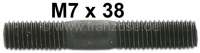
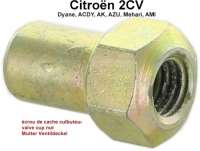
Dimension: M8x44. Or. No. ZC9622812U
Preparation of Reinz Germany.
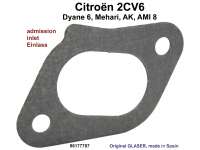
engines. Citroen 2CV6, Dyane 6, ACDY, Mehari, AMI8. Made in Germany
Preparation of Reinz Germany. Measurement: 28,3x43,75. Or.Nr.: 96177787
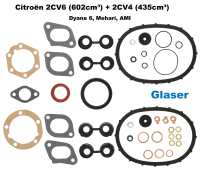
Original equipment manufacturer "Glaser"
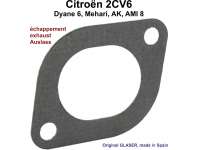
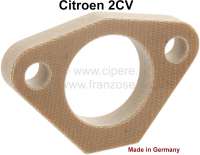
Center to center securement: 55mm. Or.Nr.: AM1412C
pistons + liners with compression ratio 8.5:1. New cylinder head left + right (incl. valves and rocker arms). Engine gasket set with oil seals, oil filler neck, oil filter. The crankshaft and camshaft are overdimensioned and can normally be used for a running performance of 500,000 km without any problems.
pistons + liners with compression ratio 9:1. New cylinder head left + right (incl. valves and rocker arms). Engine gasket set with oil seals, oil filler neck, oil filter. The crankshaft and camshaft are overdimensioned and can normally be used for a running performance of 500,000 km without any problems.
(Oil line from the engine block to the cylinder heads)
rod tube has an outer diameter of 18mm. The fit (offset on the valve push rod tube) on the cylinder head is 17x34mm. Suitable for all 2CV engines with 602ccm. High quality reproduction from the EU.
h rod tube has an outer diameter of 18mm. The fit (offset on the valve push rod tube) on the cylinder head is 17x34mm. Suitable for all 2CV engines with 602ccm. Reproduction
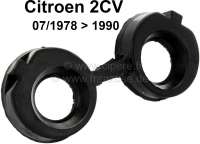
10/1972. Suitable for the follower tubing seal with narrow connecting post. Per piece!
improved material, making them significantly more durable.
Manufacturer original "GLASER".
ll length 25mm. Or.Nr. A124-4
tightened frequently too strongly, and licks then oil.
Suitable for Citroen 2CV starting from year of construction 1971.
for Citroen 2CV to year of construction 1971.
silicone. The valve cover gasket fits around the edge of the valve cover. This makes installation much easier.
diameter: 22,5mm. Height: 31,5mm. Or.Nr. AM124-9A
construction 1954). Starting from 1955 this spring are monted together with a smaller spring. Suitable for Citroen 2CV. Outside diameter: 32,5mm. Height: 40mm. Or. No. A124-9
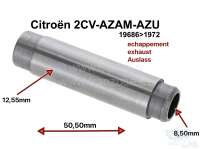
outside diameter, 50,50mm long.
diameter, 12,55mm outside diameter, 47,00mm long.
outside diameter, 45mm long.
8,00mm, fit above 10,5/11mm.
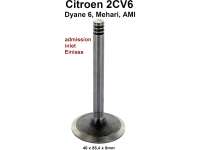
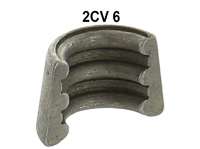
inlet + exhaust valve. You need 2 pieces per ventil.
In the 2CV6 engine with a 602 cm³ displacement, the cylinder head is a particularly important component. The engine is air-cooled, has two horizontal cylinders, and therefore features two separate aluminum cylinder heads—one per cylinder.
Unlike many water-cooled engines, the 2CV6 has no large shared cylinder head assembly and no traditional cylinder head gasket between the cylinder and the cylinder head. Sealing is achieved through cleanly mating metal surfaces and proper installation.
Each cylinder head has the following components and functions:
| Component | Function |
|---|---|
| Intake valve | allows the fuel-air mixture into the combustion chamber |
| Exhaust valve | expels exhaust gases from the combustion chamber |
| Valve guides | guide the valves precisely in the cylinder head |
| Valve seats | seal the valves when closed |
| Spark plug thread | holds the spark plug in place |
| Rocker arms and valve train | control the opening and closing of the valves |
| Cooling fins | dissipate engine heat into the air |
Since the engine is air-cooled, the cooling fins, air deflectors, and fan must be in good condition. This is the only way to reliably dissipate the heat.
On the 2CV6, there is no conventional cylinder head gasket between the cylinder and the cylinder head, as found in water-cooled engines. Therefore, it is particularly important:
| What to look out for | Why it’s important |
|---|---|
| Clean sealing surfaces | so that the cylinder head sits tightly on the cylinder |
| No sealant in the wrong place | Sealant can compromise the seal |
| Proper installation | prevents leaks and stress |
| Even tightening | Protects the cylinder head, studs, and sealing surfaces |
| Correctly adjusted valve clearance | Prevents overheating and valve damage |
Leaks in the cylinder head area often occur not at the joint between the cylinder head and the cylinder, but at the pushrod gaskets.
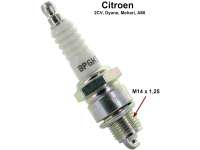
The spark plug thread is located directly in the aluminum cylinder head. Aluminum is softer than steel, so the thread can be damaged if the spark plug is inserted at an angle or tightened too tightly.
Here’s what you should keep in mind:
| Recommendation | Reason |
|---|---|
| Only remove spark plugs when the engine is cold | reduces the risk of thread damage |
| Screw the spark plug in by hand first | prevents the spark plug from being installed crookedly |
| Do not tighten with excessive force | protects the aluminum thread |
| Use the correct spark plug | Prevents overheating and malfunction |
Typical damage includes stripped spark plug threads, leaks around the spark plug, or cracks in the area of the spark plug hole. Citroën factory specifications clearly state that the spark plug may only be replaced when the engine is cold.
The exhaust valve is under particularly heavy strain in the 2CV6. It is heated significantly more by the hot exhaust gases than the intake valve.
If the valve clearance is too small, the valve may no longer close properly. As a result, it can no longer dissipate its heat sufficiently to the valve seat. The consequences may include:
| Possible consequence | Description |
|---|---|
| Poor cold start | Compression may be lost |
| Loss of power | Valve does not close properly |
| Burnt exhaust valve | due to excessive temperature |
| Damaged valve seat | due to poor sealing and overheating |
Therefore, valve clearance should be checked regularly and set correctly (0.20 mm for intake and exhaust when the engine is cold).
Incorrect or worn valve guides can cause the following problems:
| Problem | Possible effect |
|---|---|
| Excessive clearance | Oil consumption, smoke, poor running |
| Too little clearance | Sticking valves |
| Incorrect combination of parts | Leaks or engine damage |
| Worn valve seat | Loss of compression |
Oil leaks in the 2CV6 engine often originate from the pushrod seals. These seals are located in the area of the pushrods and must be clean, free of tension, and installed the correct way up.
Typical causes of oil leaks:
| Cause | Effect |
|---|---|
| Damaged pushrods | Gasket does not seat properly |
| Burrs on tube ends | Gasket is damaged |
| Incorrectly installed gasket | Oil leaks |
| Tight fit | Leakage despite new gasket |
| Contaminated sealing surfaces | No clean seal |
It is important that the pushrod tubes are round, clean, and undamaged.
The 2CV6 cylinder head relies entirely on air cooling. Even minor issues with airflow can lead to overheating.
Particularly important are:
| Component/Condition | Importance |
|---|---|
| Clean cooling fins | ensure heat dissipation |
| Complete air baffles | direct cooling air to the right places |
| intact fan | generate the necessary airflow |
| Correctly adjusted ignition | prevents excessively high combustion temperatures |
| Correct fuel-air mixture | too lean a mixture can cause overheating |
| Correct valve clearance | protects the exhaust valve in particular (0.20 mm intake and exhaust with a cold engine) |
Before installing a used or reconditioned cylinder head, the following points should be checked:
| Inspection point | What to look for |
|---|---|
| Spark plug threads | Clean, sound, not stripped |
| Combustion chamber | No cracks or severe damage |
| Area around the spark plug hole | no cracks |
| Valve seats | No chipping, no severe dents |
| Exhaust valve | not burnt, not warped |
| Valve guides | No excessive play |
| Cooling fins | clean, complete, not severely damaged |
| Sealing surface against the cylinder | clean, flat, without dents |
| Rocker arm and shaft | no significant play |
| Tappet tube area | Sealing surfaces and tubes undamaged |
You should work with particular care during installation. The cylinder head must not be installed at an angle or with excessive tension.
Important points:
| Step | Recommendation |
|---|---|
| Clean sealing surfaces | Only clean surfaces provide a reliable seal |
| Carefully place the cylinder head in position | Do not tilt |
| Align the intake and exhaust systems | Prevents stress; first tighten the cylinder head, then install the intake and exhaust manifold studs |
| Tighten the nuts in stages | Ensure even load on the head |
| Insert the pushrods correctly | Prevents damage to the valve train |
| Adjust valve clearance after installation | Always check when the engine is cold |
| Check after a test run | Check for oil leaks and smooth operation |
With the 2CV6 cylinder head, problems usually arise not from major component damage, but from minor installation or maintenance errors. The following are particularly frequently affected:
| Area | Typical problem |
|---|---|
| Spark plug threads | Damaged by incorrect installation |
| Exhaust valve | Overheated due to excessive valve clearance |
| Tappet tube gaskets | Oil leak due to incorrect installation |
| Cooling | Overheating due to missing air baffles |
| Valve guides | Wear or incorrect combination of parts |
| Installation | Tension due to uneven tightening |
The cylinder head of the 2CV6 engine is robust but requires careful handling. It is particularly important to ensure clean sealing surfaces, a flawless spark plug thread, correct valve guides, intact tappet tube gaskets, complete air cooling, and properly adjusted valve clearance.
Do not use excessive force when working in this area. Do not apply sealant to unsuitable areas, always install spark plugs carefully by hand, and have valve clearance and cooling checked regularly. This will help you avoid leaks, overheating, and consequential damage to the engine. By the way: We also offer new cylinder heads.













 VIDEO
VIDEO 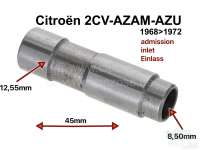
 Select your Citroen


 Please select your Peugeot


 Please select your Citroen Renault