clutch for Citroën 2CV AMI6-8
16 Articles


Clutch release lever spring. (Clutch). Reproduction. Suitable for CITROEN 2CV6, starting from year
of construction 1981. Or.Nr.: AM314-9.
Clutch release yoke for the clutch. Old version (first 602cc version), suitable for Citroen 2CV
Dyane, AMI. Or.Nr.: AM314.4
Release fork for the clutch. Suitable for Citroen 2CV6, AK, Dyane, last version, from year of
construction 03/1982. The last improved version of the release fork is reinforced compared to the previous version. Of course, our release forks are made of high-quality steel.

Clutch release sleeve 2CV old, AMI6, old version (thrust ring running in ball bearings), for use of
a multi-disk! Also suitable for Renault R4, to year of construction 1970. Renault Dauphine, 4CV. Or.Nr.: AZ 314.01.
Clutch release sleeve 2CV alt/AMI6, old version (graphitic bearing), for use of the original clutch
with 3 levers. The graphitic ring has 49mm outside diameter, 32mm inside diameter. Totally overall height of 20mm. Also suitable for Renault R4 until 1970, Dauphine, 4CV. Or. No.: AZ 314.01 / Made of very high-quality special graphite with a density of 1.9g/cm3
Release ring clutch, for all Citroen 2CV + AMi + Dyane, which have the clutch release yoke above in
the transmission bell housing. (2CV with 9, 12 + 16 HP) of Or.Nr.: A31414
Clutch set for Citroen 2CV6 + 2CV4, of year of construction 1970 to 1982. (For vehicles with drum
brake in front). Dyane of year of construction 1968 to 1982. Mehari from 1968 to 1982. The clutch set consists of: Pressure plate (3 levers) clutch disk and clutch release sleeve. Reproduction, made in Europe. Note: The clutch must be adjusted after Citroen work instruction A.312-00! Made in Europe
 PDF FILE


Clutch completely, for Citroen 2CV6, of year of construction 03/1982 to 1990 (disc brake in front)
Dyane 6, starting from year of construction 1982. Mehari, of year of construction 4/1982 to 1990. Manufacturer: Valeo. 18 teeth, diameters: 160mm. (Multi-disk) new part.

Clutch Alignment Tool, Universal. For single plate clutches. Suitable for flywheels with or without
pilot bearing. Fast to fit and remove. Universal applications. Size of collets: 14mm to 28mm across 3 adaptors. Cone size range from 35mm < 67mm (for almost all classical french cars)
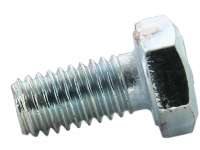
M6x12 screw. Securement clutch pressure plate (3 finger clutch) on the fly wheel. Suitable for
Citroen 2CV6 + 2CV4, to year of construction 1981.
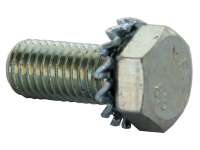
M7x16 screw + spring washer. Clutch pressure plate (disks clutch) on the fly wheel. Suitable for
r Citroen 2CV6, starting from year of construction 1981.
16 Articles
Citroën 2CV Clutch – Parts and Technical Details
Here you will find the clutch for the Citroën 2CV and its various versions.
Clutch mechanism up to model year 1968
Up to the 1968 model year, the clutch mechanism of the 2CV and the Dyane 4 consisted of a graphite release bearing and a clutch fork made from a stamped metal piece. The clutch is actuated by a clutch cable (different clutch cables were used depending on the model year). The clutch was always actuated purely mechanically, not hydraulically.
Development of the Primary Shaft and Clutch Discs
Between 1948 and 1968, the transmission’s primary shaft was further developed and modified. This development resulted in an increase in the number of keyways in the primary shaft. Consequently, the clutch plates of the 2CV (driver plate) were modified over the years.
Generations of drive plates
Throughout the entire production run of the 2CV, there were three generations of drive plates:
- The drive plate with eight keyways was installed between 1948 and December 1955.
- The clutch disc with ten keyways was used between January 1956 and April 1966.
- The 18-spline clutch disc was produced in two versions:
- The first version was produced between April 1966 and May 1968.
- The second version was installed from May 1968 until 1990, when production of the 2CV ceased at the Citroën Lusitania plant in Mangalde, Portugal.
Changes from 1981
In 1981, the clutch for the 2CV6 was changed from a lever clutch with a heavy flywheel to a multi-plate version with a lighter flywheel (clutch disc). All 2CVs with front drum brakes also have a lever clutch. In 1981, a front disc brake was introduced on the 2CV6, along with a new multi-plate clutch that requires significantly less pedal force to operate.
Special features of the release bearing up to the 1968 model year
Until the 1968 model year, the clutch release bearing was equipped with a graphite ring. Every 2CV with a graphite release bearing has an additional oil drip to lubricate the mechanism. This oil drip requires regular manual re-lubrication.
Release bearing from model year 1968 onward
Due to the high wear on graphite, Citroën eventually switched to a version of the release bearing with a ball bearing. As part of the clutch optimization, the release fork was also replaced with a more robust design. The new mounting design of the release fork required an adjustment to the mounting position. Instead of being mounted from above as before, the fork was now mounted into the clutch bell from below. Due to the greater distance to the clutch pedal, longer clutch cables were installed.
Advantages of the new clutch
The major changes to the clutch resulted in a significantly longer service life for the clutch in the 2CV. Operating forces were reduced, and smoother engagement was possible.
Centrifugal clutch for the Citroën 2CV
A centrifugal clutch was also offered for the Citroën 2CV. However, this product cannot be used as a replacement for an automatic transmission. The centrifugal clutch served merely as a starting aid. To start moving, first gear was engaged without depressing the clutch. Only an increase in engine speed is required for smooth engagement. Shifting into a higher gear is still done by depressing the clutch. Today, the centrifugal clutch has virtually disappeared from the 2CV.
How does a clutch work?
The clutch connects the engine to the manual transmission. The clutch’s ability to disengage is an essential component for the proper functioning of the manual transmission. It allows for gear shifting and ensures the ability to interrupt power transmission while gears are engaged and the engine is running.
Pressing the clutch pedal disengages the connection. Releasing the clutch pedal (engaging the clutch) re-establishes the connection. Please note that engaging the clutch, especially when pulling away, must be done with caution. Let the pedal return slowly until the clutch begins to slip. It will then engage gradually. Engaging the clutch too quickly can cause the engine to stall or result in an unpleasant jolt caused by the clutch jerking.
 Select your Citroen


 Please select your Peugeot


 Please select your Citroen Renault