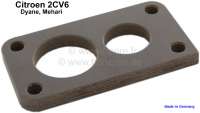
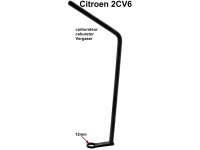
Cover plate fur the accelerator box for the Choke, for oval carburetor 2CV6 (If the pump is missing
or is defective.) Made in Germany.


or is defective.) Made in Germany.
Citroen 2CV (round carburetor). Citroen 11CV, HY, DS. Renault 4CV, Dauphine, R4, Caravelle, Floride. Peugeot 203, 403, 404, 504.
following carburetors: 26CBI, 28CBI, 30CBI (AMI6), 26/35PICS, 32PCIS, 34PCIS+PCIS, 34PICS-6
adjust the carburetor. We use it since years for our classic cars! English operating instructions are attached. For the language German, Dutch, Spanish, Italian, French can be down-load the operating instructions of our homepage.
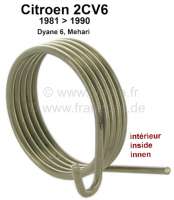
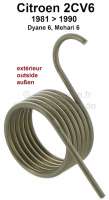
construction 1981. (oval carburetor). The spring is mounted at the exterior of the carburetor.
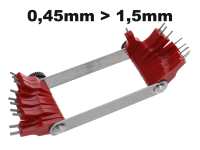
diameter of carburettor nozzles. Indispensable for work on the carburettor (e.g. changing the nozzle to original values, calibrating the carburettor, etc.).
Suitable for Citroen 2CV6.
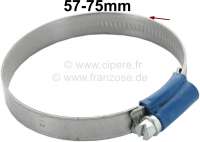
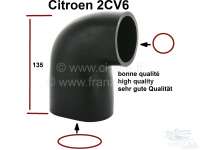
hose, the engine can pull wrong air!
carburetor on grey sheet metal air filter.
carburetor (round carburetor). Also suitable for Peugeot + Renault.
carburettors: 26CBI, 28CBI, 30CBI(AMI6), 26/35PICS, 32PCIS, 34PCIS+PCIS, 34PICS-6
09/1972. Nozzle measurement: 55. For carburetor 26/35 CSIC + 26/35 SCIC.
Renault R4, R5, R6, R12 R18, Fuego for carburetor Solex 32 SEIA, 32 EISA4, 32 SEIMA. Peugeot 504, carburetor Solex 32/35 SEIEA.
PICS3. 16mm plate, 8mm follower.
screws correspond optically to the original screws.
37mm, down: 25mm, float height: 27mm. Installed one e.g. in 2CV4+6, Peugeot, Dauphine etc.
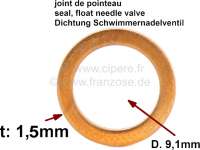
float height: 27mm. Installed one e.g. in 2CV4+6, Peugeot, Dauphine etc.
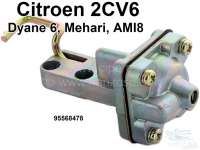
diaphragm is mounted at the carburetor above. Or. No.: 95568478
26/28/35 CSIC, SCIC. Suitable for Citroen 2CV starting from year of construction 1981, Dyane, AMI. Made in Germany.
carburetor Solex 34 PICS 4-5-6-10.
Citroen 2CV6, Dyane 6, Mehari. For oval carburetor Solex 26/35. Made in Germany.
us, and the float level (float gauge) is adjusted. The carburetor is then mounted on a 2CV 6 engine and subjected to a test run. We then adjust the carburetor completely according to Citroen specifications. The carburettor is therefore ready for installation and requires only a minimum of adjustment to your engine. The workload of around 1.5 hours is already included in the sales price.
carburetor Solex 34 PICS 4-5-6-10. With carburettor jets.
carburetor Solex 34 PICS 4-5-6-10. Without carburettor jets.
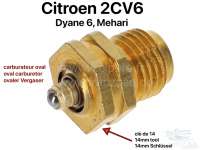
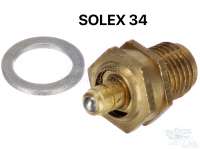
1990), AMI8, Dyane 6. carburettor Solex: 26/35CSIC + 26/35 SCIC. Contents: Gaskets, float needle valve large (14mm key) + float needle valve small (11mm key), diaphragm accelerator pump, carburettor jet stage 2 (110 + 125), jet idle, CO regulating screw. Made in Europe
year 1990), AMI8, Dyane 6. carburettor Solex: 26/35CSIC + 26/35 SCIC. Contents: Gaskets, float needle valve large (14mm key) + float needle valve small (11mm key), diaphragm accelerator pump
Carburettor Solex: 26/35 CSIC + 26/35 SCIC. With this set, the original carburettor can be repaired (of course you need expert knowledge and peace of mind). The original carburettor will then be as good as new and will not need to be repaired again for the next 30-50 years. In addition, it is certainly much better than any replica carburettor.
This overview shows which carburetor types were used in the Citroën 2CV depending on the model, model year, engine, and clutch type (manual vs. centrifugal clutch). Ideal if you want to identify a carburetor, assign it to a specific variant, or select the right replacement parts.
When the 2CV was launched in France in 1949 (2CV Type A, later 2CV AZ), the vehicles were equipped with a Solex 22 ZACI single-choke carburetor supplied by Solex.
Starting in 1954, the 2CV AZ and AZU (delivery van) models were introduced with a 425-cc engine. The engine was paired with a new carburetor:
Later, the following model was introduced for the 425-cc engines:
In February 1963, a further-developed 435 cm³ engine was introduced, initially installed in the 2CV AZL and AZLP sedans. The engine featured modified cylinder heads and an altered intake manifold. As a result, the Solex 28 was used.
Clutch/transmission variant determines:
With the introduction of the luxury model 2CV AZAM, a Zenith carburetor was installed for the first time:
The 602-cc engine (2CV6) was first introduced in a Fourgonette (AZU) in 1963 and was also equipped with a Solex carburetor:
From this point on, carburetors vary depending on the country of delivery, gasoline quality, and clutch type. The 2CV4 and 2CV6 models were equipped with single-barrel carburetors from Solex until approximately the 1978 model year (depending on the country of delivery).
Standard clutch:
Centrifugal clutch:
Starting in 1978, there was a gradual transition from the single carburetor (technical term: downflow single-chamber carburetor) to the oval twin carburetor (technical term: downflow dual-chamber carburetor). However, depending on the country of delivery, single carburetors continued to be installed until 1981.
The throttle stop screw for the 2nd stage (second register) is sealed. Idle speed is adjusted only via the stop screw of the first stage. Otherwise, there is a risk that the calibration of the first and second registers will be disrupted. This cannot be reliably restored with standard workshop equipment (if necessary, only via a carburetor test bench at manufacturers or specialized carburetor service centers).
The Solex 26/35 CSIC was installed in the 2CV6 with a standard clutch. In vehicles with a centrifugal clutch (available until the 1983 model year), the Solex 26/35 SCIC was used.
From the 1983 model year until production ceased in 1990, only the Solex 26/35 CSIC was used.
With the switch to twin carburetors, the air filter housing was also changed: Until then, it was made of sheet metal; since then, only air filters with plastic housings have been available.
We offer nearly all compatible replacement parts for carburetors of all model years, e.g., gasket sets, complete repair kits, diaphragms, or individual carburetor jets. We also carry new carburetors in our product range.
All new twin carburetors we offer are disassembled here in-house, technical specifications are adjusted, and they are then tuned on an engine test bench.


 PDF FILE




 Select your Citroen


 Please select your Peugeot


 Please select your Citroen Renault