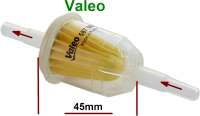
Gasoline filter made of metal chromium-plates. The filter has a inspection window. Gasoline line
connection 5-6mm. Universal fitting.


connection 5-6mm. Universal fitting.
model. Better start after long immobilisation time. The membrane of the fuel pump does not run dry quickly. Indispensable for vintage cars. For fuel hose with 5,5 - 7,5 mm internal diameter. Diameter 34mm. Construction length totally 100mm.
polyamide'. Natural colour (as original). This polyamide line is resistant to modern fuels containing ethanol! Inner diameter: 4.0 mm. Outer diameter: 6.0 mm. The line fits into the original fuel line holders on the side of the chassis. The line is mounted on the side of the chassis and connects the tank and the fuel pump. Length: 2950 mm
12/1971. The link is in front, laterally mounted at the chassis, and joins the gasoline line from the tank to the fuel hose to the gasoline pump. Dimensions: 6x1x70mm. Or. No.: 5400918. Made in Germany.
pump with hand lever. Because most of 2 cv do not run much and because of high percentage of Ethanol in fuel, the gasoline pump desiccates. With this gasoline pump it is possible to pump fuel by hand, saving the battery after long immobilisation time. Made in EEC.
64mm. Tappet length: 64mm. Or.No.: A1738A
inserted normally only with sealing compound. Made in Germany
Chromated surface, the heads of the push rod are hardened! Suitable for the following engines: A79/1, M28, M28/1. Or. no. AY173-99. Made by Franzose/CiPeRe in Europe.
e following engines: A79/1, M28, M28/1. Or. no. AY173-99
1968, Renault, Peugeot. This seal replaces the paper gasket and is made of "KLINGERSIL". 0,5mm thick. Klingersil is an extremely resistant material, against oils, petrol, alcohol etc.
cut, return not-possible!
cut, return not-possible!
Customer cut, return not-possible!
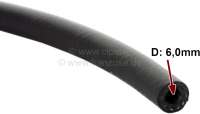
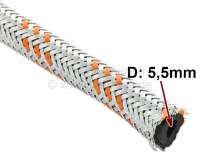
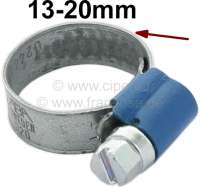
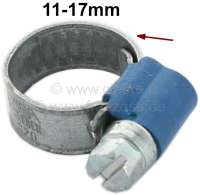
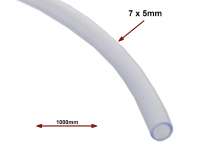
Diameter: 5,5mm. Fasten please the hose with a hose clamp. Customer cut, return not possible!
identical, to the early time used hoses. Customer cut, a return is not possible!
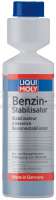
all 2 and 4-stroke engines. Ideal for our classic cars. Prevents corrosion in the tank and in the entire fuel system. Antioxidants prevent the fuel from ageing (the petrol remains ignitable). Binds and neutralises condensation in the tank. Eliminates starting difficulties when the vehicle has not been used for a long time. And as a special feature, the petrol additive has an octane booster. It therefore increases the ignitability of the petrol (knock resistance). Particularly interesting for regions in this beautiful world where there is no super petrol with at least 98 octane, or if you are involved in motor sports! Packaged in a high-quality aluminium can. Contents: 150ml. Application: 150ml is sufficient for 20 litres of petrol. Fill the tank completely. Fill in the fuel additive. Run the engine for 10 minutes. Done!
corrosion in the entire fuel system. Ensures problem-free immobilization of vintage cars, convertibles, motorcycles, scooters, quads, lawnmowers, chainsaws, and other petrol-driven 2-stroke and 4-stroke engines. Increases operational safety. With long-term effect. 25 ml from the dosing device preserve 5 l fuel. Before decommissioning, add the appropriate quantity to the tank and allow the engine to run for approx. 10 minutes.
tank at the chassis. Suitable for Citroen 2CV.
construction 09/1964 to 1974. This seal is also installed under the gearbox oil inlet screw on AMI6 with M4 engine. Dimension: 30 x 36 x 2,5mm.
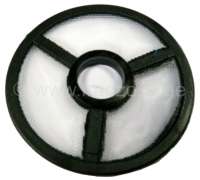
are our own reproductions with removable cover. (round cover with 6 mm screw in the middle). Diameter about 41,4mm, bore 10,3mm.
(Vehicles with light brake lines. 3,75mm). Reproduction, optically and technically like original.
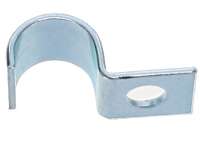
Dyane4+6, AK, ACDY, Mehari, AMI. This metal clamp is simply mounted with a screw. It can be used to attach the brake line and the petrol line at the same time. Older 2CVs up to the 1970s also had the clamp mounted on the chassis from above (1x behind the headlight carrier for the petrol line) and 1x below the main brake cylinder on the chassis (for the brake line).
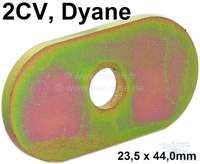
catalog are our own reproductions with removable cover. (round cover with 6 mm screw in the middle). Measurements about 44 x 36mm. 2mm heavily.
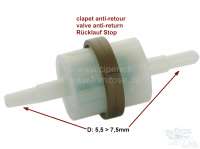
improvement for classic vehicles that use a hand pump without a ball valve to deliver water. This ensures that windscreen washer fluid is always available at the spray nozzles. Please note the direction of flow during installation! It also prevents petrol from flowing back in the fuel line (useful for longer periods of inactivity). Please install this valve close to the petrol pump (between the petrol pump and the tank).
protection please put regularly some oil on it.
Before you use the lock, please lubricate it! Note: Close and open the fuel filler cap only by a 1/4 turn! Otherwise the locking teeth can be damaged.
are really well made. They also have a fuel vent, of course. Considering the price and quality, we highly recommend them.
Citroen DS up to 1974, HY from 09/1968, 11CV from 7/1952.
Throughout their production run, the Citroën Ami 6 and Ami 8 essentially featured two different fuel tank sizes, depending on the model and the engine installed:
This was the standard size for almost all classic versions of the Ami 6 and Ami 8 equipped with the 602 cc two-cylinder boxer engine.
This larger version was introduced specifically for the Citroën Ami Super (built from 1973 to 1976). Since the Ami Super used the significantly more powerful and thirstier 1,015 cc four-cylinder engine from the Citroën GS, a larger capacity was necessary to ensure an acceptable range.
In summary: The standard models (Ami 6 & 8) used the 25-liter tank, while the top-of-the-line Ami Super featured an exclusive 40-liter tank.
A flexible yet rigid plastic hose connects the fuel tank to the mechanically driven fuel pump.
There were differences in the fuel pumps: The first models had a horizontal inlet, while later models with 602 cm³ engines (M28 engine) only had fuel pumps with a bottom inlet and vertical fuel delivery to the carburetor.
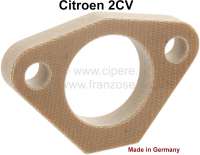
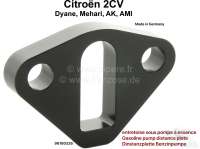
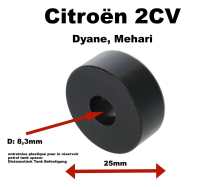
We carry all fuel pumps, fuel lines, fuel pump pushers, and spacer plates for every 2CV - AMI engine as new parts. Fuel pumps with additional manual operation are also available in our inventory.
Since the AMI 8 Super uses the engine from the Citroën GS, you can find the corresponding replacement parts under the heading: Citroën GS
What all 2CVs, Dyanes, Meharis, and AMIs have in common is the absence of a fuel return line to the fuel tank. The excess fuel produced when starting the engine is drained through the intake manifold. At its lowest point, below the carburetor, the manifold has a drain hole through which the fuel drips out over the engine block. This is why you smell gasoline during unsuccessful starting attempts.
It is extremely important that this drain hole is never blocked. If it becomes clogged, fuel accumulates in the intake manifold and can ignite, which in the worst case can lead to a fire in the 2CV.
Here’s a tip: If the AMI has been sitting for a long time, gasoline flows back from the pump into the tank. This causes the fuel pump diaphragm to dry out quickly. When you start the engine, it then takes a very long time for the fuel to be drawn in (and sometimes it doesn’t work at all). To fix this, simply remove the fuel cap and, while a second person starts the engine, blow forcefully into the tank (place your lips on the fuel filler neck!). This creates positive pressure in the tank, which pushes the fuel forward toward the fuel pump.
We also carry a fuel filter with a check valve as an upgrade. This prevents the fuel from flowing back so easily.
We also carry fuel additives that can be added during a long planned downtime (winter break). These prevent the formation of acids in the fuel for a very long time. Additionally, you should only use Super Plus gasoline.

 PDF FILE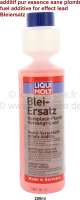
 VIDEO
VIDEO  Select your Citroen


 Please select your Peugeot


 Please select your Citroen Renault