2CV old, fender in front, mud flaps in front to year of construction 1973. 1 set (2 fittings)
Reproduction, Or No. 5413849


Reproduction, Or No. 5413849
turn signals) + rear on the front fender (above the mud flaps). Additionally on the front of the rear fenders. So, 1 complete set for the 2CV. Material: Polished cast aluminium
transition fender to pedal base, grommet of the tie rod + exhaust pipe) . Suitable for Citroen 2CV6, of year of construction 1988 to 1990.
transition fender to pedal base, grommet of the tie rod). Suitable for Citroen 2CV6, of year of construction 1988 to 1990.
fastened the starting crank inside to the fender.
box sill. Suitable for Citroen 2CV.
years of production. The lacquer will not be damaged if you tighten up the nut.
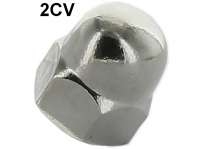
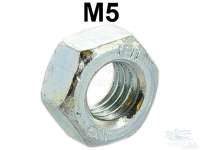
from year of construction 1963 to 1990. The nut is galvanized and has a broader seating.
with the original hollow rivets. Price per piece! (for a vehicle 8 rivets required).
rivet, after mounting. For the perfectionists among you! (it can also work using a hammer, but it does not look fine!)
1990. On the left + on the right suitable. Original Citroen (MCC), no reproduction
Suitable for Citroen 2CV, all years of construction. Material: Aluminum casting polished.
e fender. Suitable for Citroen 2CV, all years of construction. Material: Aluminum casting polished.
the Dyane, the securement of the front fenders + Renault R4. Reproduction from high-grade steel. Optically it`s a small different to the original ones. Measurements: 6,3x19
for vehicles with steering wheel on the right (RHD)
first models after corrugated sheet bonnet!)
the seventies, and is not suitable for angular headlamps! Poor quality.
1977 to 1990 (also suitable for angular headlamps). Original, no reproduction
right. The sheet metals are untreated, so that they can be coated. Made in Germany.
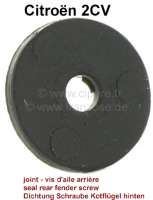
washer (Strie) (reproduction as original). Suitable for the front (2x) and rear (4x) bumpers. Per piece! The screw is also installed in the Citroen AMI6. It is located on the side of the front fender and is screwed to the front mask.
During its long production run from 1948 to 1990, Citroën offered various fender models for the 2CV, which differed mainly in the integration of turn signals.
The 2CV did not have turn signals on the fenders until the 1961 model year. On these models, the turn signal is mounted on the roof at the top of the C-pillar.
On Belgian-built 2CVs from the 1961 model year onward, the turn signals are rectangular. Starting in June 1965, French-produced 2CVs were also delivered with rectangular turn signals in the fenders. It wasn’t until April 1970 that the company switched to round turn signals, which remained in production until manufacturing ceased in 1990. Initially, gray plastic mounts were used for the turn signals; in the 1980s, black plastic mounts were used instead.
Please note that when removing the fender, the live wire must be disconnected on the engine compartment side at the lamp bracket or headlight mount. In many cases, a separate ground wire was used, which is connected either to the fender, the mounting bracket, or the frame.
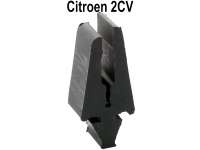
The front fenders of the 2CV are secured with 4 nuts. Two nuts are located on the headlight bracket, one at the bottom of the A-pillar, and one at the top of the engine bulkhead. Additionally, the fenders are secured to the frame with two rubber mounts or rubber forks each, one in front of and one behind the drive shaft.
On older 2CVs built before 1961, the holes for the turn signals are not present, as these were not required by law at the time. Furthermore, older 2CVs do not have holes for cooling air ventilation in the inner fenders, as this feature was not yet provided for at that time.
A distinctive feature of the fenders on vehicles with a corrugated metal hood are small shielding plates at the upper rear fender mounting. These serve to cover a gap that would otherwise open between the side panels of the hood and the fender. Additionally, the fender is not secured here using rubber brackets on the chassis, but rather in a metal bracket with round rubber grommets.
During removal, the outer corners of the front bumpers may scratch the fenders. To protect against scratches, a cloth should be placed over the bumper corners.
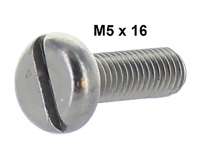
Before removing the front fenders, the triangular plates must be removed. These are secured with three M5 screws.
Please disconnect the positive cable from the turn signal. The power supply is connected to the lamp holder and can be disconnected there (round plug contact).
You must also disconnect the ground connection from the fender (originally, the ground cable runs from the turn signal to an M7 screw on the chassis, to which the bumper bracket is also bolted).
Now loosen the 2 nuts on the lamp bracket at the bottom and top, as well as 1 nut on the engine bulkhead, and remove the fourth nut at the corner of the sill and A-pillar. The nuts have a 19mm wrench size and can be loosened with the jack handle.
First, tilt the fenders outward at the top edge, then lift them diagonally upward at a 45° angle over the front wheel.
Installation is essentially performed in the reverse order of removal. Additionally, the lower edge of the inner fender must be inserted into the rubber mounts on the frame. Afterward, the upper edge of the fender is swung inward.
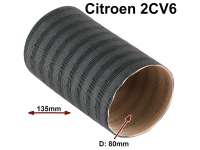
Please ensure that the cooling air outlet (exhaust hose) is properly mounted to the heat exchanger and the fender grommet.
If present, please ensure that the rubber flaps for the tie rod and exhaust bushings are correctly secured (on the last 2CV models from 1988 to 1990).
Before new sheet metal parts are sent for painting, they must be test-fitted to the vehicle and adjusted if necessary.
This applies not only to Citroën but also to other car manufacturers.
The turn signal’s ground connection is sometimes made via a cable in the wheel well that runs directly from the turn signal to the frame. At this point, a disconnect point with plug-in contacts or cable lugs can be installed. Another option is to route the ground cable through the protective sleeve parallel to the power supply to the lamp harness and establish the ground connection there via a plug-in contact.
In some cases, the ground connection is routed directly from the turn signal housing to the fender panel. Contact issues can arise if the contact resistance between the fender, lamp bracket, or body is too high. In this case, contact can be improved either by exposing a bare spot at a bolted connection point or by installing an additional ground cable running parallel to the power supply.
 VIDEO
VIDEO 



 Select your Citroen


 Please select your Peugeot


 Please select your Citroen Renault