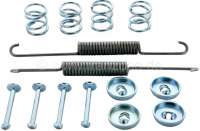
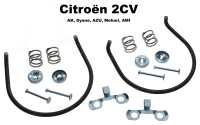
Brake shoes mounting set in front, suitable for Citroen 2CV (small drum in front, 200mm diameter)
Scope of delivery: 4x locking pin with spring + plate, 2x tension spring for the brake shoes.


Scope of delivery: 4x locking pin with spring + plate, 2x tension spring for the brake shoes.
front, 220mm diameter). Scope of delivery: 4x locking pin with spring + plates.
with drum brake at the front axle). Lining-wide about 35mm. 200mm diameter.
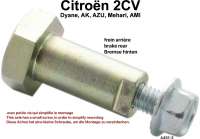
drum brake in front). Also suitable for Citroen DS (drum brake rear). 39mm overall length. Or. No. A451-83
2CV6, starting from year of construction 03/1970. Dyane 4. Brake system: DOT. Brand quality, no reproduction. Brake line connector: 8,0mm. For drum diameter: 200mm. Lining-wide: 36mm. Or. No. 95618228
enables to renew the complete front brake system: 2X new brake calipers, 1X brand brake discs, brand brake pads + hand brake pads and 1 liter LHM. 3x brake pipe seal.
for Citroen 2CV. Or.Nr.: AZ 451 202A
supplied (without axle). Made in Germany.
plate, 10mm thick). Suitable for all Citroen 2CV rear + Citroen DS rear.
axle and anchor plate). Dimension: 9.5 x 27mm.
construction 1981. AMI, Dyane, Mehari.
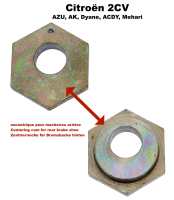
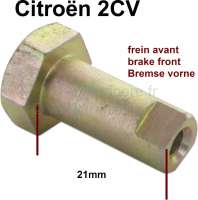
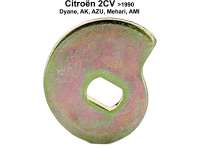
Diameter cam: 16mm. Bore: 10mm. Tool mounting: 21mm. Per piece.
Citroën GS 1.0. Due to manufacturing variations on the part of Citroën (in Portugal), it may be necessary to grind the brake pads down slightly.
of year of construction 1981 to 1990.
from the year 1981 > 1990.
Fitted to 2CVs from the year 1981 > 1990.
to 1990. The brake disks are perforated and have more brake power. The disks are particularly for operating tow trailer, 2CV van (if heavily loaded) etc. In normal driving mode, a conversion is not necessary.
1981 to 1990. Reproduction.
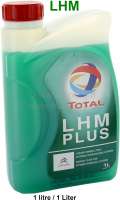
to 1990. Original manufacturer quality. Of it their safety is dependant. Be careful: If the brake discs are installed at the front of your car: Just use hydraulic fluid LHM as brake fluid and never DOT4! DOT4 can destroy within 24hours the hole brake system. That is expensive und very dangerous. Every LHM brake part is green marked.
(small drum, not suitable for 2CV Van). Per piece.
Suitable for Citroen 2CV6, Dyane, AK, AMI8. Or. No. AM452-96
Citroen 2CV with front drum brake. Or.Nr.: A454-18
Citroen 2CV with front drum brake. Or.Nr.: A454-18a
optically like original!
optically like original!
(not suitable for our number 13020 + 13021). Citroen 2CV. 35mm inside diameter, 250mm long.
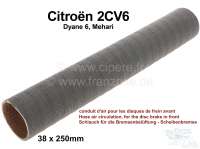
Reproduction. Inside diameter: 38mm. Length: 250mm.
Accurate reproduction from synthetic, as the original hoses. Inside diameter 40-42mm, length 235mm.
The most important rule for every 2CV owner is the strict separation of brake fluids. Mixing them will quickly destroy all seals and can cause total brake failure.
The front axle of the 2CV6 has unique features rarely found on other vehicles. Since the brakes—whether drum or disc—are mounted inside the transmission, this results in specific requirements for maintenance, cooling, and sealing.
Since the brakes are mounted directly on the transmission housing, the heat generated by friction is transferred directly to it.
This point is particularly often overlooked.
On the 2CV6, the parking brake acts on the front axle.
Since braking force is generated at the transmission, it must be transmitted to the wheels via the drive shafts.








 Select your Citroen


 Please select your Peugeot


 Please select your Citroen Renault