Citroën 2CV Pedals: An Overview of Floor-Mounted and Suspended Pedals
Over the decades, the Citroën 2CV underwent a fundamental change in pedal design and mounting method. A distinction is made between the early floor-mounted pedals and the later suspended pedals.
The two basic designs of the Citroën 2CV pedals
- Standing pedals (1948 to approx. 1970):
- Installation position: The clutch and brake pedals extend directly from the floor panel. The accelerator pedal is mounted on the floor panel.
- Shape: The clutch and brake pedals are round.
- Special feature: This design is susceptible to dirt and moisture, which can penetrate through the slits in the floor panel. Additionally, the ergonomics take some getting used to, as you press your foot forward rather than down.
- Suspended pedals (approx. 1970 to 1990):
- Installation: The pedals hang from a sturdy metal bracket, the pedal bracket, which is mounted under the dashboard on the bulkhead.
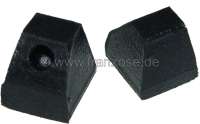
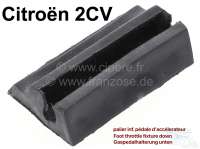
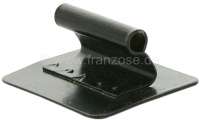
- Shape: The treads are rectangular and covered with rubber caps. On many models, particularly the 2CV6, the accelerator pedal remained a standing pedal for a long time. Over the course of the 1970s, Citroën switched to a suspended accelerator pedal.
- Operation: All floor-mounted accelerator pedals operate via a metal rod connected to the carburetor. Since the switch to a suspended accelerator pedal, operation is via a cable pull.
What should be noted in particular regarding Citroën 2CV pedals?
- Master Cylinder: The installation position of the pedals determines the type of master cylinder.
- With floor-mounted pedals, the master cylinder is bolted to the bottom of the vehicle frame.
- With suspended pedals, the master cylinder is located in the engine compartment directly on the pedal mount. This makes maintenance much easier. Important: When replacing it, it must be removed from the inside.
- Pedal spacing: Due to the design of the 2CV, the pedals are very close together. Drivers wearing modern, wide shoes often press the brake and accelerator at the same time—a classic beginner’s mistake.
- Wear: The pedal mount for the suspended pedals can wear out over time, although this is rather rare. Similarly, the accelerator pedal can loosen on the mounting shaft, which can usually be tightened quickly.
- Return springs: Especially on early models, the pedal return springs are critical for safety. If they break, the pedal will no longer return.
- Throttle Return: The throttle pedal always has a return spring on the throttle linkage. On a hanging throttle pedal, a spring is mounted between the engine fan housing and the carburetor.
Maintenance tip: The foot pedal bushings in the floor panel should always be well-lubricated, and the rubber boots should remain intact. This prevents splashing water from damaging the mechanism or your feet.


 Select your Citroen


 Please select your Peugeot


 Please select your Citroen Renault