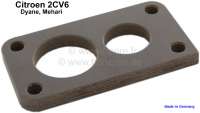
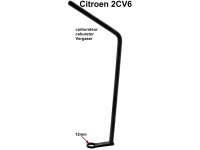
Cover plate fur the accelerator box for the Choke, for oval carburetor 2CV6 (If the pump is missing
or is defective.) Made in Germany.


or is defective.) Made in Germany.
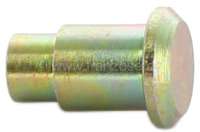
Length: 18,0mm. Diameter: 4,93mm. Or. No. AM142-67
Citroen 2CV (round carburetor). Citroen 11CV, HY, DS. Renault 4CV, Dauphine, R4, Caravelle, Floride. Peugeot 203, 403, 404, 504.
following carburetors: 26CBI, 28CBI, 30CBI (AMI6), 26/35PICS, 32PCIS, 34PCIS+PCIS, 34PICS-6
adjust the carburetor. We use it since years for our classic cars! English operating instructions are attached. For the language German, Dutch, Spanish, Italian, French can be down-load the operating instructions of our homepage.
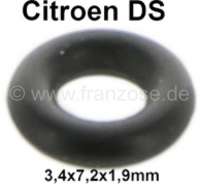
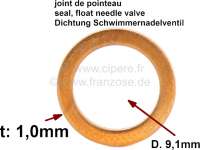
different thicknesses of the seal are required, to adjust the fuel level of the float chamber.
different thicknesses of the seal are required, to adjust the fuel level of the float chamber.
different thicknesses of the seal are required, to adjust the fuel level of the float chamber.
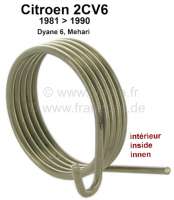
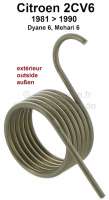
construction 1981. (oval carburetor). The spring is mounted at the exterior of the carburetor.
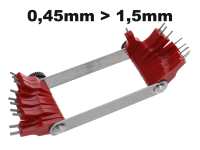
diameter of carburettor nozzles. Indispensable for work on the carburettor (e.g. changing the nozzle to original values, calibrating the carburettor, etc.).
Suitable for Citroen 2CV6.
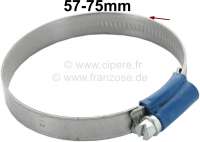
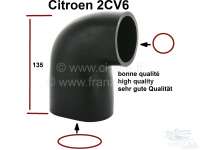
Connection port 50-55mm. You can use it for other french car's.
hose, the engine can pull wrong air!
reproduction of original manufacturer. The hose is made of the same material and not so wobbly as the reproduction hoses.
carburetor on grey sheet metal air filter.
suitable for oval carburetor!
carburetor (round carburetor). Also suitable for Peugeot + Renault.
carburettors: 26CBI, 28CBI, 30CBI(AMI6), 26/35PICS, 32PCIS, 34PCIS+PCIS, 34PICS-6
construction 09/1972. For carburetor 26/35 CSIC + 26/35 SCIC.
09/1972. Nozzle measurement: 55. For carburetor 26/35 CSIC + 26/35 SCIC.
Renault R4, R5, R6, R12 R18, Fuego for carburetor Solex 32 SEIA, 32 EISA4, 32 SEIMA. Peugeot 504, carburetor Solex 32/35 SEIEA.
PICS3. 16mm plate, 8mm follower.
screws correspond optically to the original screws.
37mm, down: 25mm, float height: 27mm. Installed one e.g. in 2CV4+6, Peugeot, Dauphine etc.
float height: 27mm. Installed one e.g. in 2CV4+6, Peugeot, Dauphine etc.
diaphragm is mounted at the carburetor above. Or. No.: 95568478
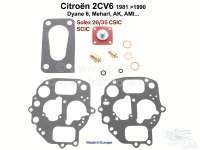
26/28/35 CSIC, SCIC. Suitable for Citroen 2CV starting from year of construction 1981, Dyane, AMI. Made in Germany.
carburetor Solex 34 PICS 4-5-6-10.
504 L, J7. Renault Dauphine + Floride. The diaphragm has a diameter of 20mm.
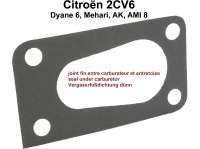
Citroen 2CV6, Dyane 6, Mehari. For oval carburetor Solex 26/35. Made in Germany.
us, and the float level (float gauge) is adjusted. The carburetor is then mounted on a 2CV 6 engine and subjected to a test run. We then adjust the carburetor completely according to Citroen specifications. The carburettor is therefore ready for installation and requires only a minimum of adjustment to your engine. The workload of around 1.5 hours is already included in the sales price.
carburetor Solex 34 PICS 4-5-6-10. With carburettor jets.
carburetor Solex 34 PICS 4-5-6-10. Without carburettor jets.
When the Citroën 2CV Type A was launched in France in 1949, it was equipped with a single-barrel carburetor supplied by Solex, the 22 ZACI. Later, in 1954, the 2CV AZ and AZU (delivery van) models were introduced with a 425 cc engine. This naturally also required a new Solex carburetor, the 26 BCI, which was introduced in October 1955 and further developed in April 1958. Starting with the 1958 model year, this carburetor was then also used in the 2CV AZL and AZLP models.
The Solex 26 IBC carburetor was later introduced for the 425-cc engines and continuously optimized. The jet size was gradually adjusted from 15.5 mm to 17 mm and then to 19 mm. In February 1963, an upgraded engine with a displacement of 435 cm³ made its debut, initially installed exclusively in the 2CV sedans (AZL and AZLP). This engine featured modified cylinder heads and an altered intake manifold, which necessitated the use of the Solex 28 carburetor. For vehicles with a standard manual transmission, the Solex 28 IBC was used, while the 2CV with a centrifugal clutch utilized the Solex 28 CBI. With the introduction of the luxury model 2CV AZAM, a Zenith carburetor, the 28 IN, was installed for the first time. However, there were also AZAM models equipped with the Solex 28 IBC carburetor. The AZAM marked the first time a carburetor from another manufacturer was used in 2CV production—a unique occurrence!
The legendary 602 cc big-block engine made its debut in 1963 in the Fourgonette (AZU). This engine was also equipped with a Solex carburetor. From 1963 to 1966, the Solex 30 PICS was installed. Starting with the 1967 model year, the 2CV AZU was delivered with the Solex 32 PICS.
After the relatively straightforward use of Solex carburetors, things became somewhat more complex. The continued success of the 2CV, which was now also available in numerous other countries, required continuous adjustments to the carburetors. Different carburetors were used depending on the country, gasoline quality, and vehicle usage. Additionally, a distinction must be made between 2CVs with manual and centrifugal clutches.
The 2CV4 and 2CV6 models were equipped with single-choke Solex carburetors until around 1978 (depending on the country of delivery). The following carburetors were used on vehicles with standard clutches:
Vehicles with a centrifugal clutch, on the other hand, had the following carburetors:
Starting in the 1978 model year, there was a gradual transition from the single carburetor (technically correct: down-draft single-choke carburetor) to the oval twin carburetor (down-draft dual-choke carburetor). In some markets, however, the single carburetors continued to be installed until 1981.
The throttle stop screw for the second stage (the second register) is now sealed. Idle speed is adjusted exclusively via the stop screw of the first stage. This measure is necessary to prevent any adjustment of the tuning between the first and second registers. Such a misalignment can no longer be corrected with standard workshop equipment, as the carburetor would have to be mounted on a carburetor test bench, which is only available to manufacturers or specialized carburetor service providers.
The 2CV6 with a standard clutch was equipped with the Solex 26/35 CSIC. Vehicles with a centrifugal clutch, produced up to 1983, were fitted with the Solex 26/35 SCIC. From 1983 until production ceased in 1990, only the Solex 26/35 CSIC was used. With the introduction of twin carburetors, the air filter housing—which had previously been made of sheet metal—was also changed. Since then, only air filters with plastic housings have been available.
We offer a wide selection of replacement parts for carburetors of all model years, including gasket sets, complete repair kits, diaphragms, and individual carburetor jets. We also carry new carburetors in our product range. All new twin carburetors we offer are disassembled at our facility, their technical specifications adjusted, and then tuned on an engine tester.




 PDF FILE


 Select your Citroen


 Please select your Peugeot


 Please select your Citroen Renault