shock absorber - suspension balls for Citroën 2CV 2CV6
17 Articles




Shock absorber (2 fittings) in the rear, for Citroen 2CV + Dyane. For 12mm shock absorber
securement. Manufacturer "Record France". Price is for 2 fittings. Mounting: Synthetic cap to the wheel! The shock absorbers please 5x push through, before they are mounted. Air in the shock absorber is removed! These shock absorbers are oil pressure shock absorbers are soft. Just as the 2CV was originally delivered.
Shock absorber (2 fittings) in front, for Citroen 2CV + Dyane. For 12mm shock absorber securement
Manufacturer "Record France". Price is for 2 fittings. Mounting: Synthetic cap to the wheel! The shock absorbers please 5x push through, before they are mounted. Air in the shock absorber is removed! Length compressed: 340mm. Extended: 500mm. These shock absorbers are oil pressure shock absorbers are soft. Just as the 2CV was originally delivered.
Gas pressure shock absorber (2 fittings) in the rear, for Citroen 2CV. For 12mm shock absorber
securement. Manufacturer "Record France". The gas pressure shock absorbers are a bit firmer (but not hard), but have a more sensitive response. Price is for 2 fittings. Mounting: Synthetic cap to the wheel! The shock absorbers please 5x push through, before they are mounted. We only use gas pressure dampers on our 2CVs. So that's our recommendation!
Gas pressure shock absorber (2 fittings) in front, for Citroen 2CV. For 12mm shock absorber
securement. Manufacturer "Record France". The gas pressure shock absorbers are a bit firmer (but not hard), but have a more sensitive response. Price is for 2 fittings. Mounting: Synthetic cap to the wheel! The shock absorbers please 5x push through, before they are mounted. Length compressed: 340mm. Extended: 500mm. We only use gas pressure dampers on our 2CVs. So that's our recommendation!
Shock absorber rear, suitable for Citroen 2CV (per piece). 12mm securement eye. Manufacturer Boge
Sachs! The Boge Sachs shock absorber is very soft!
Shock absorber in front, suitable for Citroen 2CV (per piece). 12mm securement eye. Manufacturer
Boge Sachs! The Boge Sachs shock absorber is very soft!
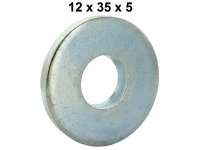
Shock absorber pin - washer, medium version. Suitable for Citroen 2CV with 12mm shock absorber pin
Measurement: 12,5 x 35 x 5mm.
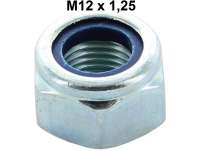
26 long nut, for the original shock absorber pin. Suitable for Citroen 2CV. Original one, our shock
absorber pin 12066 is fastened with a 27mm key!
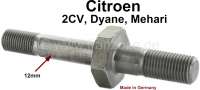
Shock absorber pin at the suspension pot, suitable for Citroen 2CV. 12mm diameter. For 26mm tool
mounting. Bad reproduction.
Shock absorber pin at the suspension pot, suitable for Citroen 2CV. 12mm thread diameter for the
shock absorber. Made in Germany, from high-strength steel.
Front axle cover plate on the left, with stud bolt (12mm diameter) for the securement of the shock
absorber. Suitable for Citroen 2CV. Made in Germany.
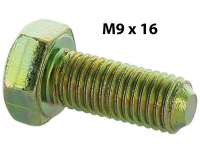
Front axle cover plate on the right, with stud bolt (12mm diameter) for the securement of the shock
absorber. Suitable for Citroen 2CV. Made in Germany.
17 Articles
Citroën 2CV6 Friction Damper: Model Years, Discontinuation, and Technical Differences
On the Citroën 2CV6, introduced in 1970, the friction damper marked the end of an era. Since the 2CV6, with its 602-cc engine and approximately 28 hp, was significantly faster than its predecessors, the mechanical friction dampers reached their physical limits.
Here you will find the most important differences and technical facts about the 2CV6 with friction dampers.
The production years of the Citroën 2CV6
The 2CV6 was built during a period of technological upheaval:
- 1970 to August 1975: The 2CV6 was still equipped with friction dampers (frotteurs) and inertia dampers (batteurs) at the front. At the rear, it already had hydraulic shock absorbers as standard during this period.
- From September 1975 (1976 model year): Switch to hydraulic telescopic shock absorbers on the front axle as well. The mounts for the friction dampers on the swing arm were eliminated, as were the characteristic inertia dampers on the wheel hubs.
The Speed Factor in the 2CV6
Since the Citroën 2CV6 reaches a top speed of approximately 110 to 115 km/h, as opposed to the 80 to 90 km/h of the early 12-hp or 16-hp models, the load on the friction dampers is significantly higher.
- Heat: When driving fast on uneven roads, the friction discs generate a lot of heat. This causes the linings to glaze over more quickly on the 2CV6 than on slower models.
- Wear: Maintenance intervals are shorter on the early 2CV6. Adjusting the friction force is necessary more frequently to prevent the typical surging at higher speeds.
Adjusting the friction dampers on early Citroën 2CV6 models
If you own an early 2CV6 manufactured before September 1975, the following adjustment values apply to the 1-meter lever arm:
- Front axle: 40 kg to 45 kg; this is the standard value for the sedan.
- Practical tip: Since the 2CV6 is heavier than an early AZ, the upper limit of 45 kg is recommended to achieve more stable handling in curves.
Avoiding mixed parts on the Citroën 2CV6
A common mistake when repairing the 2CV6 is uneven repair of the front axle.
- Many owners replace the friction lining on only one side. Since the 2CV6 may have front drum brakes from the early 1970s or retrofitted disc brakes, uneven damping leads to dangerous pulling during braking. The 2CV may veer to the left or right as a result.
- Special note: If your 2CV6 still has friction dampers, the inertia dampers on the steering knuckles or wheel hubs should also be checked. If these are rusted solid or have lost oil, the 2CV6 will bounce heavily despite correctly adjusted friction dampers.
In summary, the Citroën 2CV6 is the most powerful model that was still equipped with friction dampers as standard. When driving it on a daily basis, precise and uniform adjustment on both the left and right sides is crucial for straight-line stability, driving stability, and safety.
 Select your Citroen


 Please select your Peugeot


 Please select your Citroen Renault